.png)


Period Poverty in Canada
- Ananya G.
- Feb 7, 2021
- 3 min read
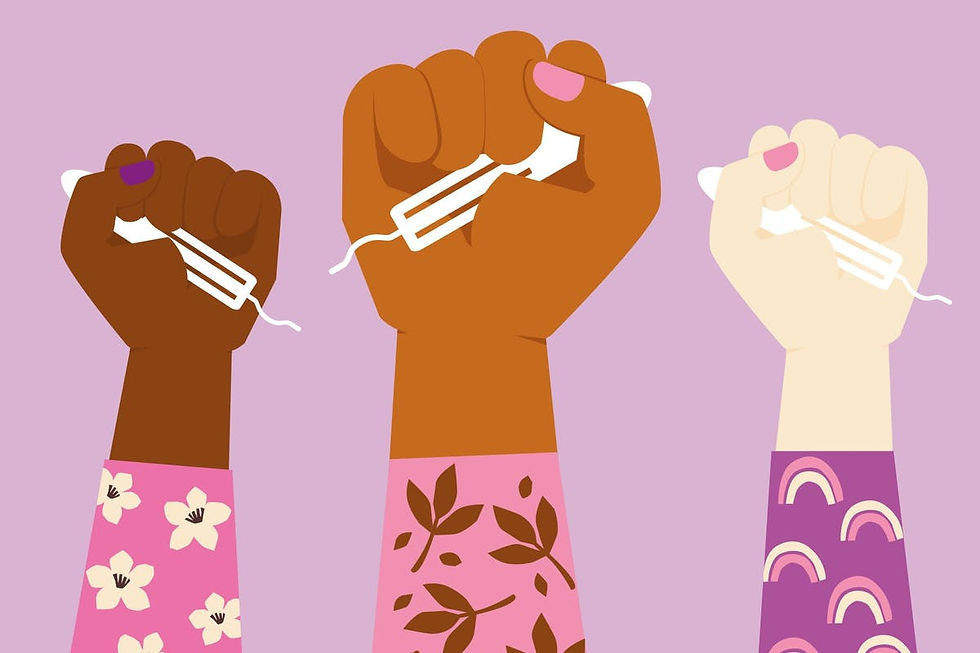
Period poverty in our society is one of the many harsh predicaments women face during their monthly menstruation cycles. Although women and children have a supply of hygiene products designed for their periods in their local supermarkets, many households don’t prioritize purchasing the proper hygiene products according to its importance considering their economical conditions. We may not believe that this issue occurs in our society, but it is found that one-third of Canadian women under the age of 25 are struggling to purchase their period necessities every month, which shows a neglected sign of poverty in Canada.
Ideally, a female individual receives her first period within the ages of 11 and 14 and will continue to menstruate until approximately the age of 50. After estimating, all women with a period will menstruate for a full six years in total throughout their life and will typically have to spend $6,000 worth of menstrual hygiene products in their lifetime. This indicates that all families require a supply of period hygiene products for six years for each female individual that gets their period in their household. The price of menstrual products vary according to your location in Canada. For example, when purchasing a box of tampons in Nunavut, the anticipated price ranges up to $15 and $18 for each box. However, when buying the same box in Metro in Vancouver the price ranges between $3 to $11 and can even be less expensive when purchased in bulk. There tends to be a selection of prices for menstrual products within urban areas, as there is a variation of stores available for these certain products for women to compare the prices. Women in rural communities are required to spend double the expenses for their menstrual hygiene products in contrast to urban communities, making it very daunting for low-income women to devote money towards these necessities. Although online shopping is an option for any price comparison, it requires a fixed address within their range of delivery and, generally, a credit card. In 2015, Canada dismissed taxes on menstrual hygiene products; however, these products were still inaccessible for homeless, low-income, and disregarded women due to their original cost eliminating taxes.
Those who can’t afford the proper necessities to protect them during their period rely on unsanitary methods that lead to inimical health implications. Typically, women who wear tampons for a prolonged period of time could discover possible infections that lead to toxic shock syndrome. Moreover, studies have shown that utilizing unsanitary measures for their menstrual cycle can increase the chances of lower reproductive tract infections within women.
There are many non-profit organizations found not only in Canada, but around the world that strongly believe that ALL menstrual hygiene products should be equally and easily accessible to women across the globe, disregarding anyone’s financial situation. Whenever the general public uses public washroom facilities, they are provided with resources such as toilet paper for their personal hygiene. Likewise, these certain organizations or individuals stand for the certainty of menstrual hygiene products in stock for women of our country for their own personal cleanliness in public facilities. By implementing government incentives for financial aid to get hold of hygiene products, we are able to provide women with the utmost care for their personal hygiene. There are innumerable reasons why menstruation products are not easily accessible for female individuals in our society in terms of a cultural and social perspective; however, we shouldn’t view menstruation cycles as unsanitary or embarrassing, but as an initiative to help ameliorate the health of Canadian women.
SOURCES:



Comments